MKVToolNix 92.0 review: confirm languages and defaults before a delivery MKV
Hands-on GUI and mkvmerge mux of H.264 + AAC + SRT, with language-code and SRT charset traps documented.
Read article ToolBrivioPractical software guides for video creators.
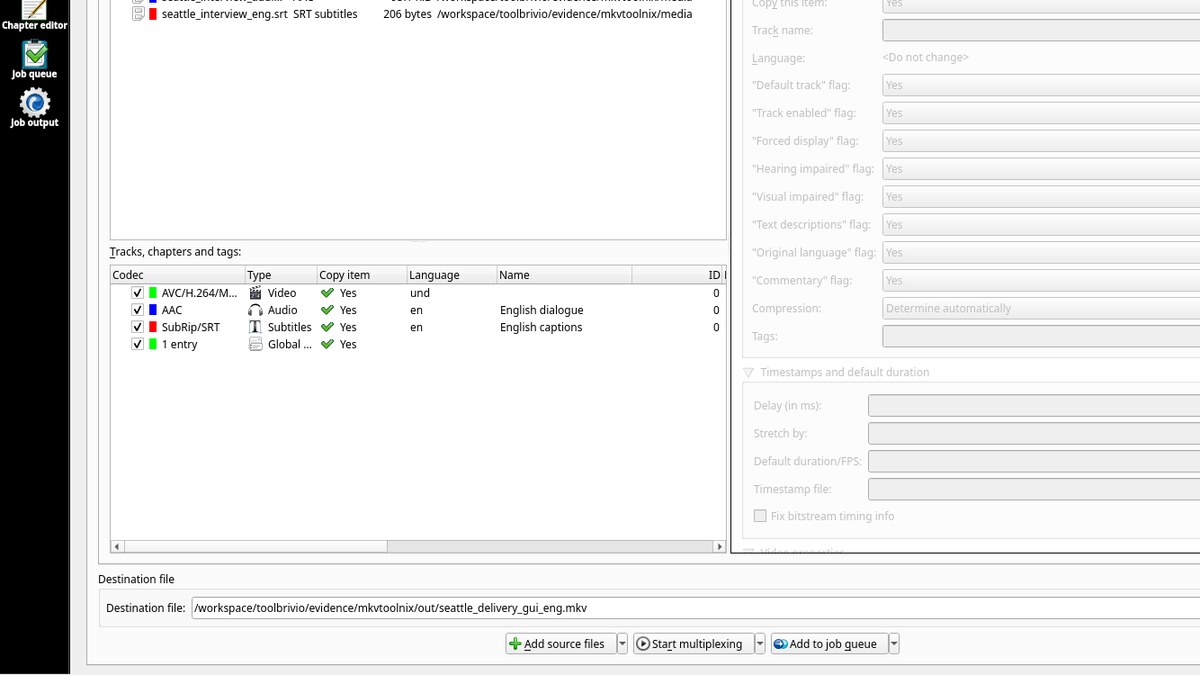
Mux separate video, audio and SRT into one delivery MKV, then confirm language tags and default-track flags before export. Our hands-on check used MKVToolNix 92.0 (“Everglow”) on Linux.
Visit the official websiteOn Debian 13 we muxed a 6-second H.264 video-only MP4, an AAC LC mono dialogue track and a UTF-8 SRT into one Matroska file with the GUI Multiplexer and again with mkvmerge. Correct runs set languages und/eng/eng, audio default on, subtitle default off. Extracted Annex-B H.264 from source, CLI and GUI outputs shared the same SHA-256—stream copy, not a re-encode.
Limits from those runs: Typing enq in the GUI Language field did not block multiplexing; identify showed language_ietf=enq while the older language field stayed und. A Windows-1252 SRT without --sub-charset triggered a UTF-8 warning and extracted with replacement characters; declaring windows-1252 fixed it. Wrong default flags were written faithfully. macOS/Windows installers, mobile use, large-file speed, network privacy and player auto-select beyond ffprobe disposition were not tested.
Hands-on GUI and mkvmerge mux of H.264 + AAC + SRT, with language-code and SRT charset traps documented.
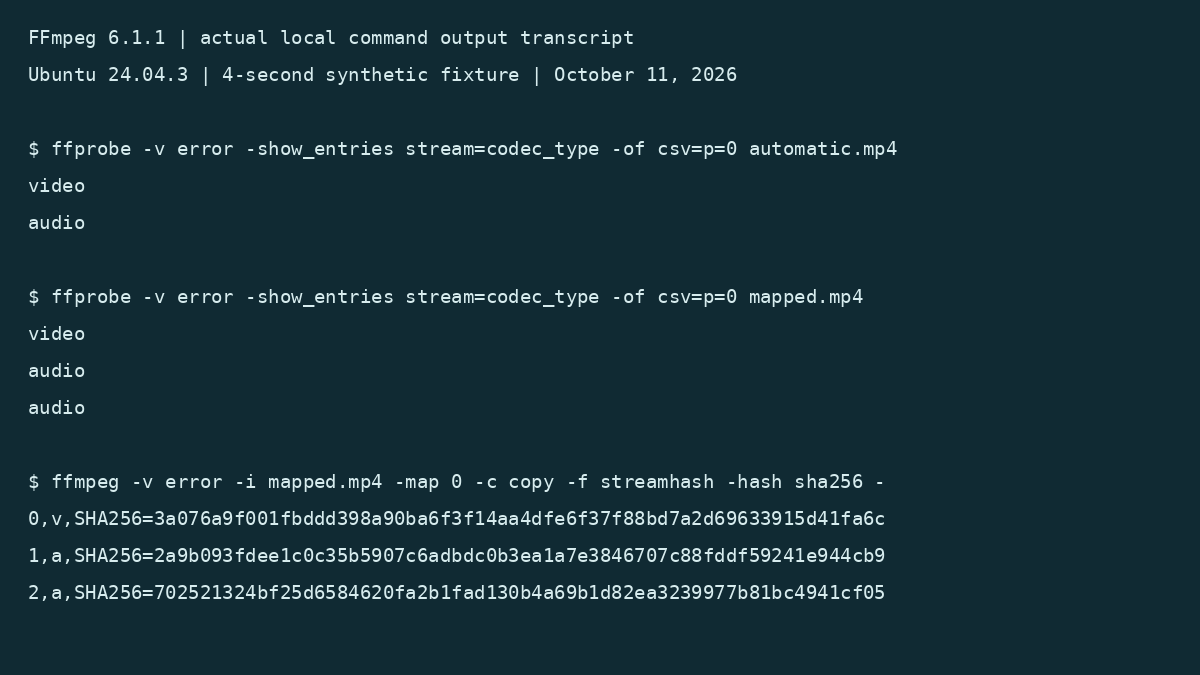
Read articleCLI stream mapping and silent track loss when you already live in the terminal.
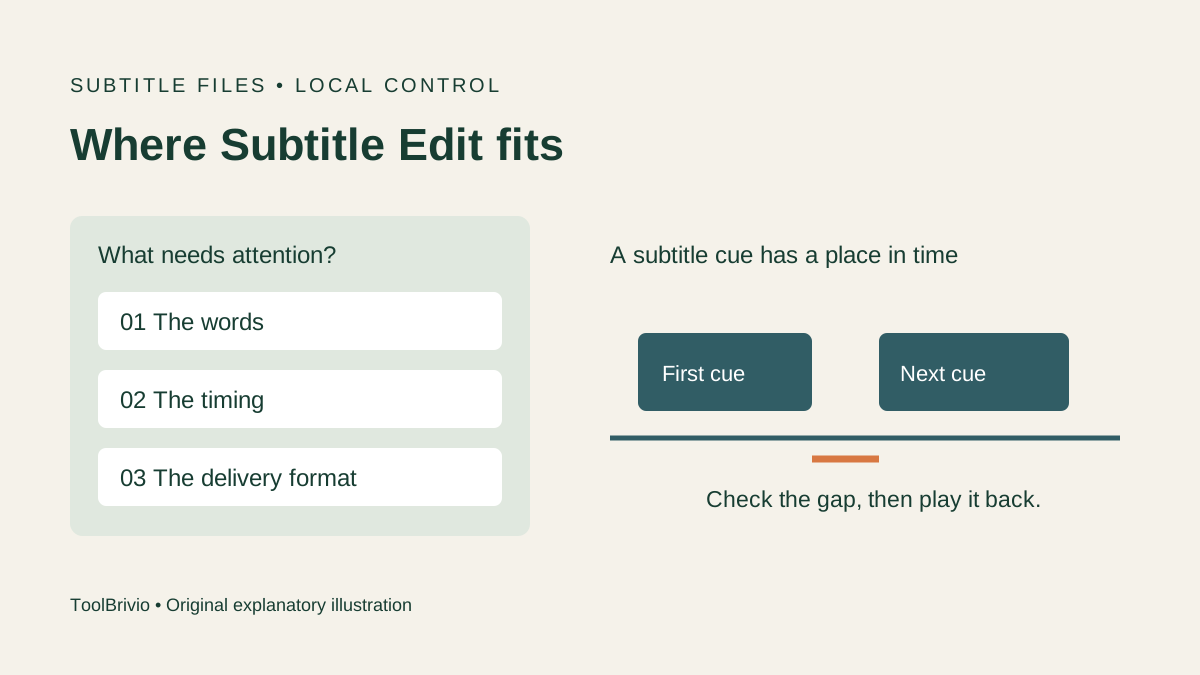
Read articleFix cue timing on an existing SRT before you mux captions into a delivery MKV.
Read articleOfficial packages cover Linux, Windows and (again) macOS binaries for recent releases—our lab used Debian packages 92.0-1+deb13u1 only. Confirm architecture and release notes on the project site before a delivery machine switch.
Convert legacy SRT to UTF-8 · FFmpeg for CLI remux · Subtitle Edit for timing